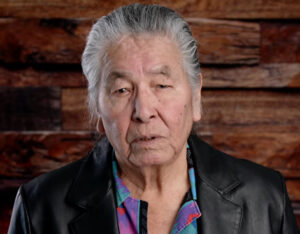
Sheldon Peters Wolfchild
Sheldon is a Sundancer and Mdewakanton Sioux Elder from Morton reservation. Sheldon was born in 1946 and raised on the Lower Sioux Indian Reservation being the youngest of eight children. He attended the Institute of American Indian Arts in Santa Fe, New Mexico and the Ray-Vogue School of Design in Chicago, Illinois focusing on stone sculpture. Drafted into the military in 1969, he served in Vietnam and was awarded the bronze medal while there. After returning home he worked in film and television productions as varied as ‘Sesame Street’ in 1975, ‘Star Trek: The Next Generation’, ‘A Miracle in the Wilderness’, ‘Dances with Wolves’ and most recently ‘The English’ produced by Emily Blunt.
He created his production company 38 Plus 2 Productions in memory of the victims of the largest mass hanging in United States history. His passion for unmasking the truth through film is fueled by his deep love for Mother Earth, his children, grandchildren and all Native people so they can be recognized and honored in their true and proud identity as Native Americans.
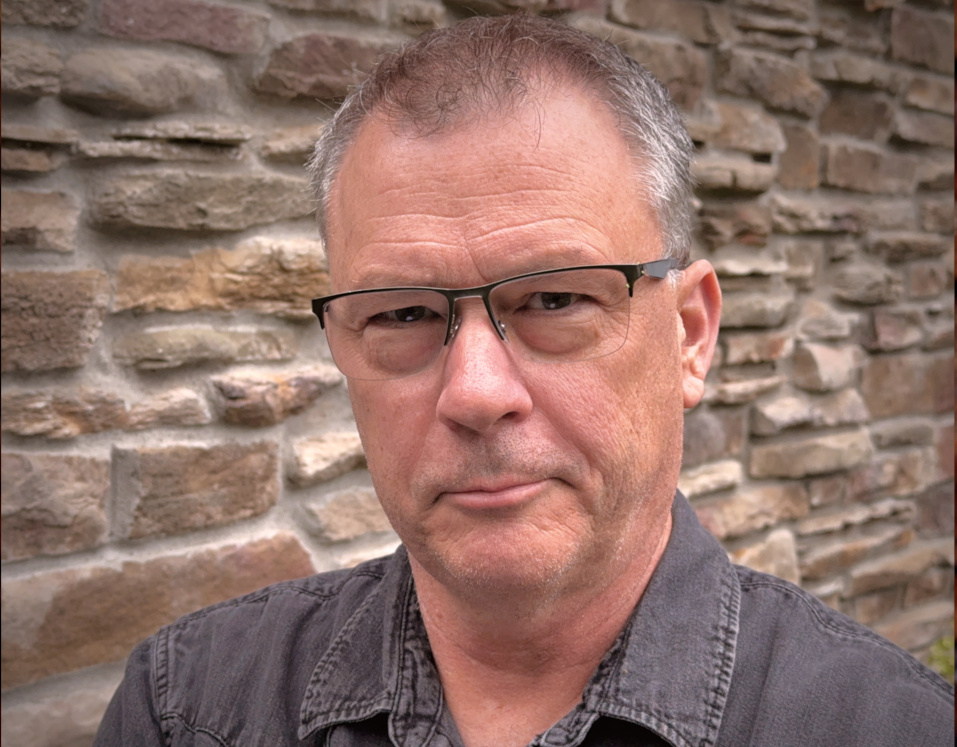
Bill Weiss
Bill Weiss first met Dakota filmmaker and activist Sheldon Wolfchild in 2002. That meeting began a long creative partnership and a deep involvement in documenting the history, culture, and experiences of the Dakota people in Minnesota.
Working closely with Sheldon, Bill filmed and edited countless hours of interviews with Dakota elders, as well as important Dakota events, gatherings, and cultural activities. He helped produce four documentaries exploring Dakota history and the Dakota War of 1862, and created much of the original music for the films.
His work with Sheldon also led to involvement in additional Dakota documentary projects produced for Dakota Wicohan, as well as Little Crow and the Dakota War, co-produced with writer and historian Mark Diedrich and broadcast on Twin Cities Public Television.
Over more than two decades, Bill’s role has been to help preserve Dakota stories and voices through film, sound, and music—work that has become an important part of his life and creative journey.